Fall Rain Finds Every Weak Chimney in Western NC
Once the steady fall rains roll into Asheville, Hendersonville, and the surrounding mountains, our phones start ringing about chimney leaks. It is one of the most common roof problems we see this time of year, right up there with clogged valleys and missing shingles.
Here is the part that surprises most homeowners: the chimney itself is usually fine. The leak is almost always happening where the chimney meets the roof, at a thin layer of metal called flashing.
What Chimney Flashing Actually Does
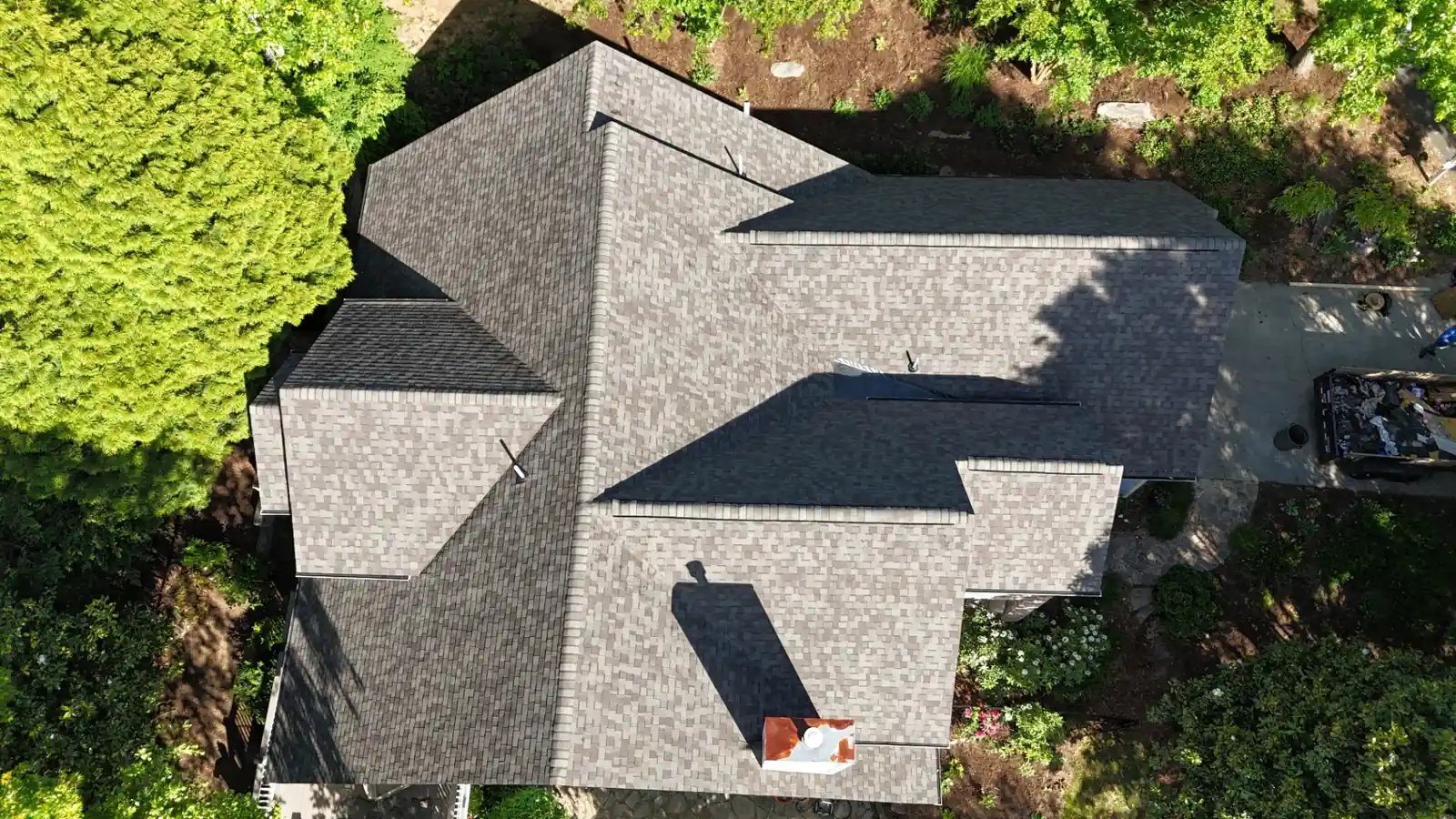
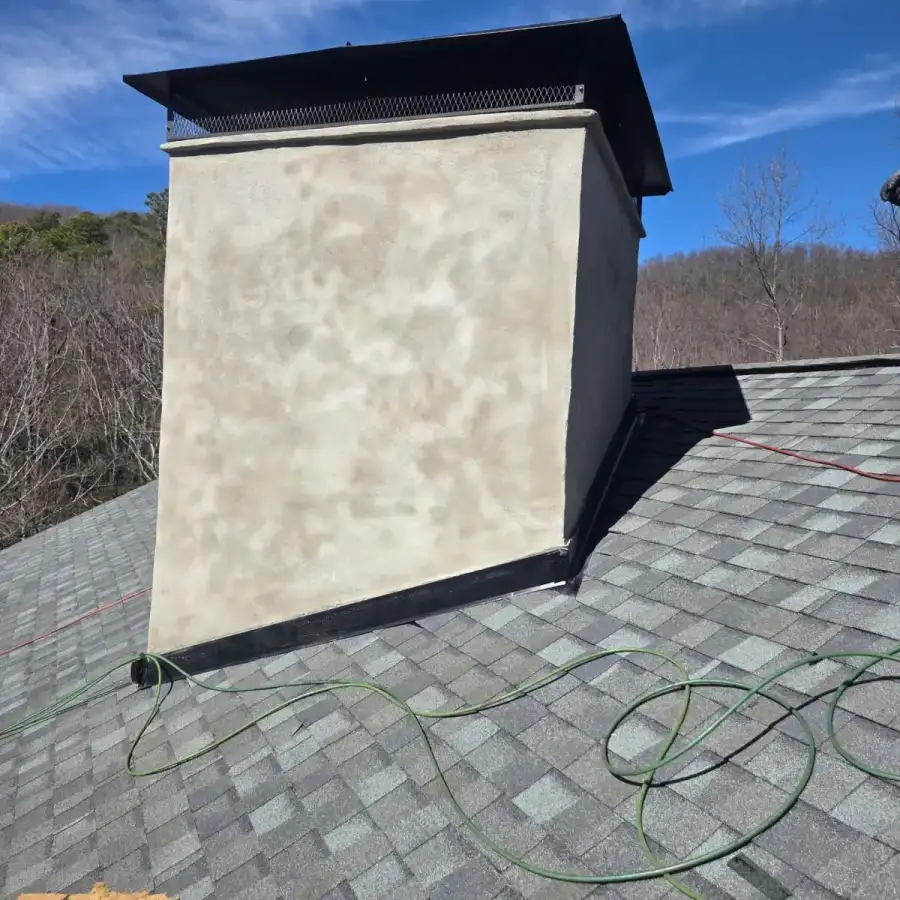
Flashing is the sheet metal system that seals the joint between your chimney and the roof surface. Done right, it has multiple layers: step flashing woven into the shingles along the sides, a cricket (a small peaked diverter) behind the chimney on wider chimneys, and counter flashing cut into the mortar joints to cover everything from above.
That joint takes a beating. The chimney is masonry and barely moves. The roof deck expands, contracts, and flexes with temperature and weather. The flashing is the flexible bridge between the two, and it is the first thing to wear out.
How to Tell If Your Chimney Is Leaking
You usually will not see the leak at the chimney itself. You will see the evidence somewhere else:
If you see a brown ring anywhere near the chimney, read our guide on what a water stain on your ceiling means and then get the roof checked.
What Actually Causes the Leak
When we inspect a leaking chimney in Asheville, Hickory, Statesville, or Mooresville, it is almost always one of these:
Why Fall Is When It Shows Up
Summer storms are fast and heavy. Fall rain in the mountains is different: long, slow, soaking rain that lasts hours or days. That sustained water is what gets past tired flashing. Add falling leaves piling up behind the chimney and holding moisture against the roof, and small weaknesses turn into active leaks.
It is also the best time to fix it. Flashing repairs are quick, single visit jobs in most cases, and getting it sealed before winter means you are not dealing with freeze and thaw cycles making the gap bigger.
Can It Be Fixed Without Replacing the Roof?
Almost always, yes. A proper chimney flashing repair means removing the old flashing and shingles around the chimney, installing new step flashing and counter flashing cut into the mortar joints, adding or rebuilding the cricket if needed, and reshingle the area to match. The rest of the roof stays untouched.
If the chimney masonry itself is the problem, like a cracked crown or failing mortar, that part is a mason's job, and we will tell you straight when that is the case.
The one situation where it makes sense to wait is if your roof is already near the end of its life. Re-flashing a chimney on a roof that needs replacement within a year means paying for the same work twice. A quick inspection answers that question. If you are not sure where your roof stands, our post on how long a roof lasts in the NC mountains is a good starting point.
Get It Checked Before the Next Rain
Chimney leaks do not stay small. Every rain pushes more water into the deck, insulation, and framing around the chimney, and what is a simple flashing job in October can be decking repair by spring.
Call Lane Roofing at (828) 490-1830 or request a free inspection. We serve Asheville, Hendersonville, Weaverville, Black Mountain, Hickory, Statesville, Mooresville, and all of Western NC.
Worried About Your Roof?
Get a free roof inspection from a local crew. We'll take a look, show you photos of what we find, and give you an honest answer on what it needs.
Serving Asheville, Western NC, Mooresville, Lake Norman, Hickory and Statesville.